Maharashtra · on the Krishna

Sangliसांगली

A city the colour of turmeric, set where the Krishna bends through western Maharashtra — trading floor to Asia's हळद, home to the workshops that still build sitars by hand.

16.853° N74.583° E

Follow the river

Act II · The River

Where the Krishna
shapes the landकृष्णा

The Krishna rises in the Western Ghats and runs east across the Deccan toward the Bay of Bengal. Sangli sits on one of its bends — close enough that the river sets the town's edges, its ghats, and the reach of its old floods.

Follow it a little upstream and downstream and the district appears: grape country at Tasgaon, the confluence with the Warana at Haripur, the Dattatreya shrine at Audumbar on the water's edge.

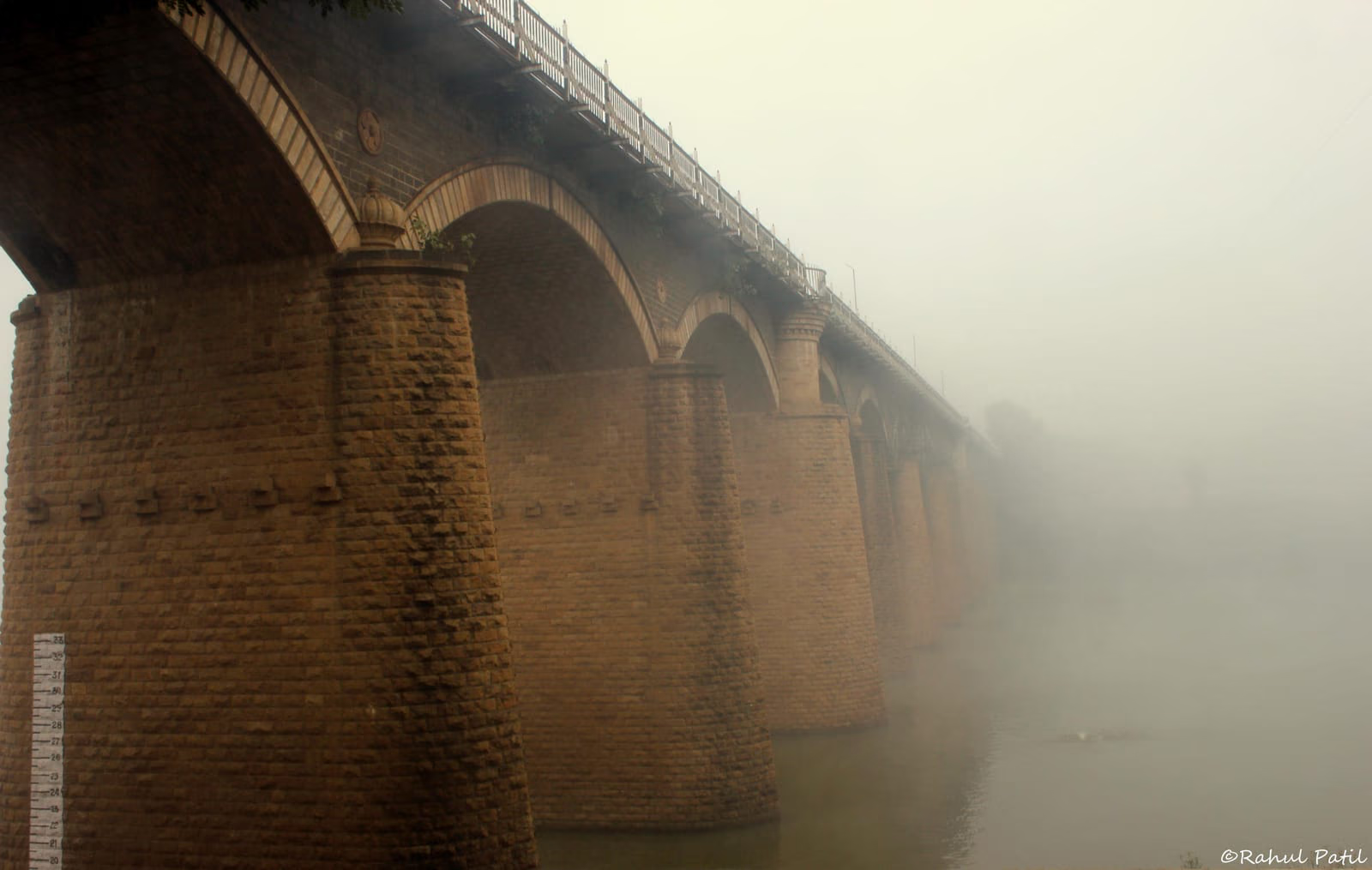
The Irwin Bridge carrying the road across the wide Krishna river at Sangli.
The Irwin Bridge over the Krishna at Sangli — British-era, and still the river's most familiar crossing.Photo: Nicrahul, CC BY-SA 3.0, via Wikimedia Commons.

Act III · Halad · हळद

A city painted in turmeric

Before it is a spice it is a trade. For over a century, sacks of dried turmeric fingers have moved through Sangli's market yards, and the prices set here have carried across the country. The city earns its nickname plainly: the Turmeric City of India.

Asia's

largest turmeric trading centre, by long reckoning.

2018

the year “Sangli Turmeric” won a Geographical Indication.

Peve

underground pits, kept dry, where the crop is stored for months.

The colour is not a metaphor here. It is on hands, on scales, on the floor of the yard — the specific ochre of ground हळद, which the rest of this page borrows.

Act IV · Fields of Abundance

What the black soil returns

Between the Krishna and the Warana the soil is deep and dark, and the district earns an old boast — a corner of the western Deccan reliably called a sugar bowl. A short field-guide to what it grows.

  1. Grapesद्राक्षे

    Tasgaon is the district's grape country — the 'City of Grapes' — exporting Thompson Seedless and the locally bred Tas-A-Ganesh.

  2. Raisinsबेदाणा

    The same vines feed a major raisin (bedana) trade, dried in the Deccan sun and graded for markets across India.

  3. Sugarcaneऊस

    Cane and more than thirty sugar factories give the district its standing in Maharashtra's sugar economy.

  4. Turmericहळद

    And halad, of course — the crop that made the market, carried back through Act III.

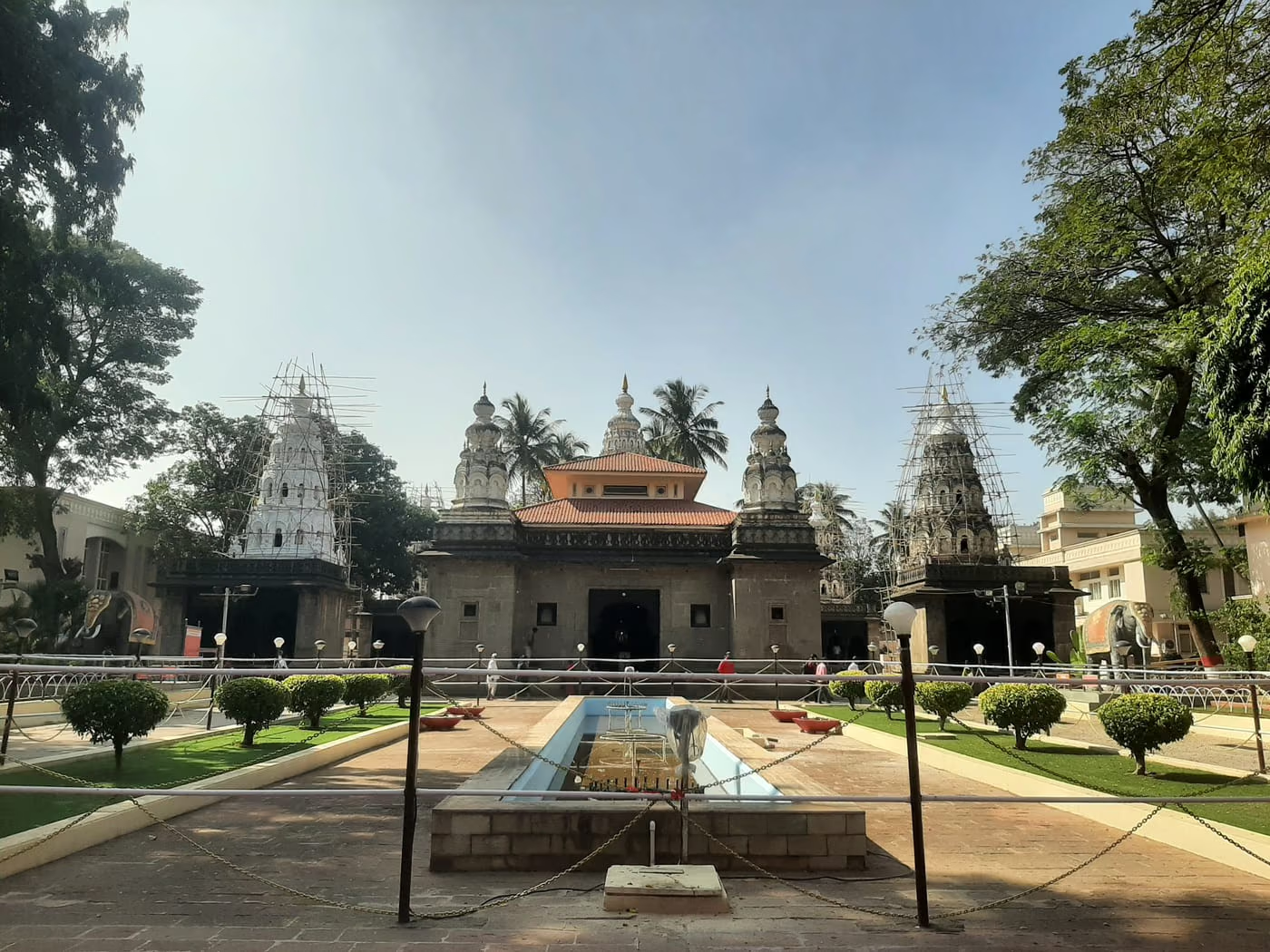
The Shri Ganapati Mandir in Sangli, a stone temple to Ganesha built by the Patwardhan rulers on the bank of the Krishna.
Shri Ganapati Mandir, Sangli.Photo: Dhondudagde, CC0, via Wikimedia Commons.

Act V · Faith & Stone

The Patwardhans' गणपती

When the Patwardhans held Sangli as a princely state, they built a temple to Ganesha as its guardian — the Shri Ganapati Panchayatan, begun under Chintamanrao 'Appasaheb' Patwardhan I and completed in 1843. Its foundation was packed with lime mortar against the Krishna's floods.

That same year, a few streets away, another Sangli man staged the first play in the Marathi language. Faith and theatre share a date here — 1843 — which is where the next act begins.

Sources differ on exactly when work began — somewhere in the 1810s — so the start is given as a decade, not a year.

Act VI · Strings, Stage & Screen

The region learned to play

Made by hand in Miraj

Just across the river, Miraj has built classical string instruments since the eighteenth century — sitars, tanpuras, sarods — a craft traced to Faridsaheb Shikalgar, whose descendants took the surnameSitarmaker. Around two dozen family workshops still cluster near Shaniwar Peth. In 2024 the Miraj sitar and tanpura were granted Geographical Indication tags.

A shrine that keeps a raga

At the Miraj dargah lies Abdul Karim Khan, a founding voice of the Kirana gharana. An annual festival in his memory has drawn Bhimsen Joshi, Gangubai Hangal and Prabha Atre — Hindustani classical music returning, year after year, to the town that shaped it.

The stage begins, 1843

Vishnudas Bhave, born in Sangli, staged Sita Swayamvar here in 1843 — the first play performed in the Marathi language, under a Patwardhan ruler's patronage. Marathi theatre starts, by most accounts, on a Sangli stage.

And a voice, and a face

Sangli's people carried its sound outward: Asha Bhosle was born in the old Sangli State in 1933; the actress Sai Tamhankar in the city in 1986. A district that makes instruments has never been short of performers.

Act VII · Taste

Bhadang भडंग

The everyday taste of Sangli is a handful of bhadang: puffed rice tossed hot with peanuts, sliced garlic, curry leaf and red chilli until it is sharp, oily and impossible to stop eating. It travels well, which is why the Sangli–Kolhapur belt sends it out in paper bags across Maharashtra.

Much of the wider table here — jowar bhakri, a fierce red rassa, the spice mix called metkut — belongs to western Maharashtra as a whole rather than to Sangli alone. We name it as regional, because it is.

Act VIII · People & Stories

Sangli, in the people it sent out

A short, deliberately conservative roll — each name here has a specific, checkable tie to Sangli, not a borrowed one.

  1. Vishnudas Bhave

    विष्णुदास भावे

    TheatreSangli · d. 1901

    Born in Sangli, he staged the first Marathi-language play, Sita Swayamvar, here in 1843 under the patronage of the Patwardhan ruler — which is why he is remembered as the father of Marathi theatre.

  2. Asha Bhosle

    आशा भोसले

    Playback singingb. 1933, Sangli State

    One of the most recorded voices in the world was born in the village of Goar in the former Sangli State in 1933.

  3. Smriti Mandhana

    स्मृती मानधना

    Cricketb. 1996

    India's opening batter grew up in Madhavnagar, Sangli, and learned her cricket in the district before playing for India.

  4. Vasantdada Patil

    वसंतदादा पाटील

    Public lifeSangli district

    A former Chief Minister of Maharashtra, he came from Sangli district and remains closely identified with the region's cooperative and sugar economy.

  5. Sai Tamhankar

    सई ताम्हणकर

    Cinemab. 1986, Sangli

    The Marathi and Hindi film actress was born in Sangli in 1986.

  6. G. D. Madgulkar

    ग. दि. माडगूळकर

    Poetry & screen writingSangli district

    The poet-lyricist known as 'Ga Di Ma', author of the Geet Ramayan, came from Sangli district.

Act IX · The Atlas

Explore the district

An illustrated map of the Sangli region — the city on the Krishna, Miraj's workshops, the grape country at Tasgaon, and the river pilgrimages beyond. Choose a place from the list or the map.Marked positions are approximate; this is a story map, not a survey.

Krishna · कृष्णा

Places

Act X

Sangli,alwaysसांगली

The river keeps moving; the market opens again at dawn; somewhere in Miraj a new string is strung. A city is not a monument — it is the turmeric under a fingernail, a 1843 stage, a bowl of bhadang on a train.

Make a Sangli postcard →